
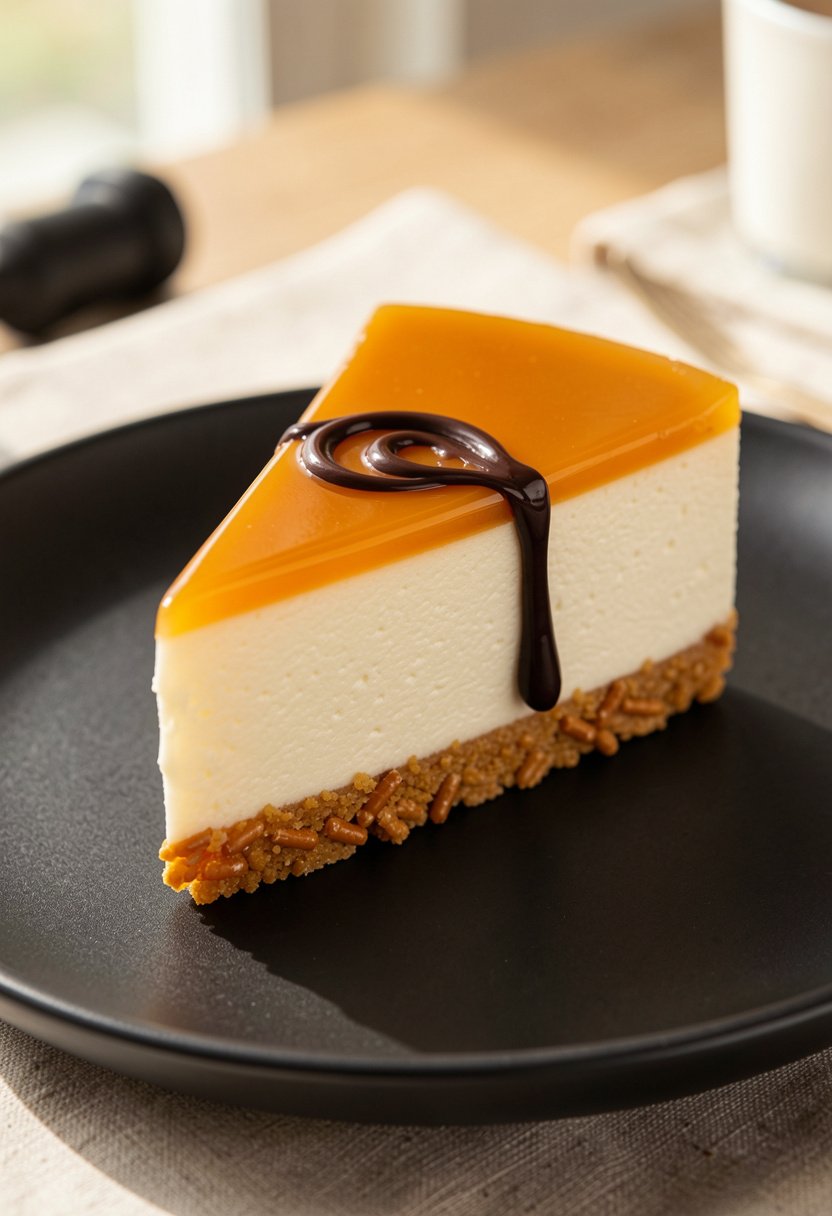
High-Protein Pretzel Caramel Cheesecake: Easy Low-Fat Recipe
A high-protein pretzel caramel cheesecake combines a crunchy, salted pretzel stick crust with a light, low-fat curd cheese filling, topped with smooth protein caramel and a marbled chocolate cocoa glaze.
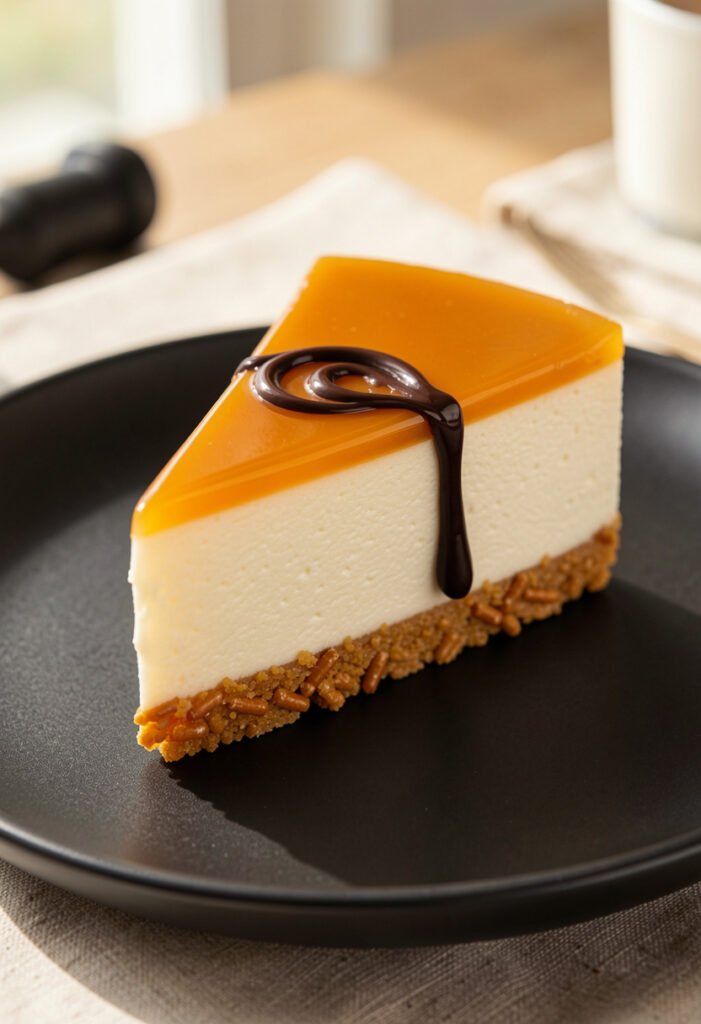
Why This High-Protein Sweet and Salty Cheesecake Works
Balancing fitness goals with indulgence often feels like a compromise. Traditional caramel cheesecakes easily exceed 600 calories and 40 grams of fat per slice. By replacing heavy cream cheese with low-fat quark (Magerquark) or strained Greek yogurt, this recipe delivers a luxurious, velvet-smooth texture while keeping the fat content remarkably low.
The crushed pretzel stick base provides a distinct salty crunch that cuts through the sweetness of the caramel pudding layer. Furthermore, incorporating cocoa powder with natural zero-calorie sweetener creates a decadent chocolate swirl without adding unnecessary refined sugars.
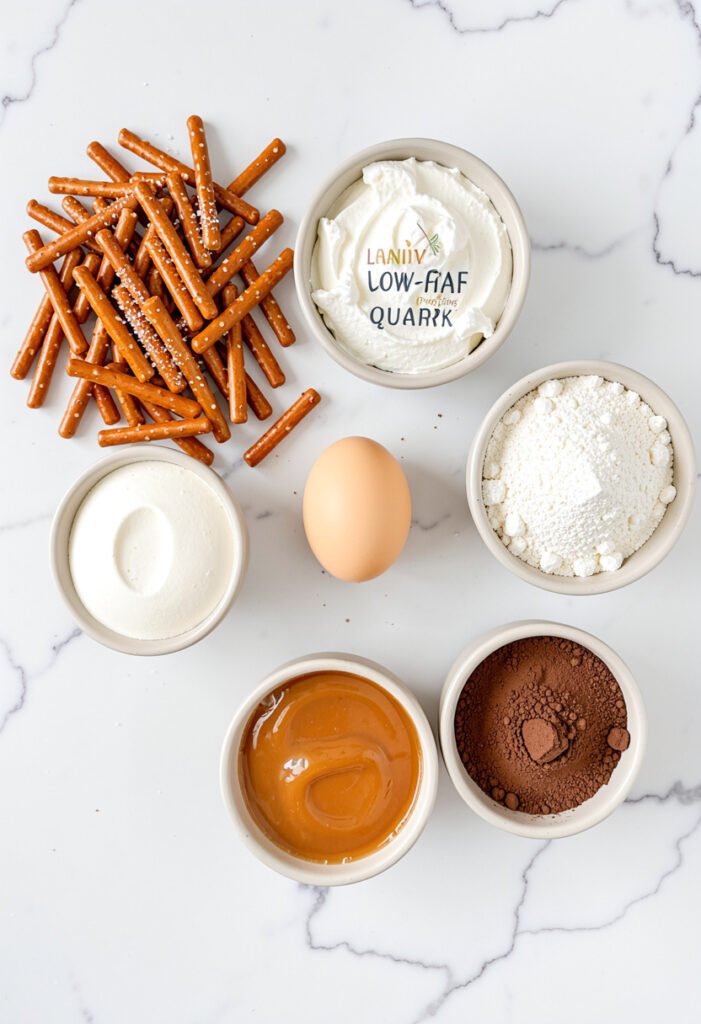
Complete Ingredients List
This recipe makes one 7.5-inch (19 cm) cheesecake, yielding 4 large portions.
For the Salted Pretzel Crust
- Salted Pretzel Sticks (Salzstangen): 2.5 oz (70 g), finely crushed.
- Light Margarine or Reduced-Fat Butter: 2 tablespoons (30 g), melted.
For the Low-Fat Protein Cheesecake Base
- Low-Fat Quark (Magerquark) or 0% Plain Greek Yogurt: 1.1 lbs (500 g).
- Egg: 1 large egg.
- Vanilla Pudding Powder or Cornstarch: 2 tablespoons (approx. 20 g).
- Granulated Erythritol / Stevia Blend: ⅓ cup (80 g), or your preferred zero-calorie sweetener.
For the Chocolate Caramel Topping & Swirl
- High-Protein Caramel Pudding: 3.5 oz (100 g).
- Ground Psyllium Husk Powder: ¼ teaspoon (1 g) for stabilization.
- Unsweetened Baking Cocoa Powder: 1 tablespoon (10 g).
- Chocolate Flavor Powder or Zero-Calorie Sweetener: 1 scoop (approx. 3 g).
- Warm Water: 2 tablespoons, to form the chocolate glaze.
Step-by-Step Preparation Instructions
1. Build and Press the Pretzel Crust
Preheat your oven to 350°F (180°C) conventional or convection setting. Line the bottom of a 7.5-inch (19 cm) springform pan with parchment paper. Place the salted pretzel sticks into a zip-top bag and crush them thoroughly with a rolling pin until coarse crumbs form. Melt the light margarine in the microwave for 15 seconds, mix it thoroughly with the pretzel crumbs, and press the mixture firmly into an even layer at the bottom of the pan.
2. Mix the Creamy Quark Batter
In a medium bowl, combine the low-fat quark (or Greek yogurt), egg, vanilla pudding powder, and erythritol/stevia sweetener. Whisk gently until completely smooth and lump-free. Avoid over-beating the mixture, as incorporating excess air can cause the cheesecake to rise and fall drastically during baking. Pour the batter carefully over the prepared pretzel crust and smooth the surface with a spatula.
3. Bake with Steam Control
Place the springform pan on the middle rack of the preheated oven. Position a heatproof cup or small bowl filled with water on the oven rack right beside the baking pan. Bake at 350°F (180°C) for 30 minutes. The moisture from the water cup prevents the top of the cheesecake from drying out or cracking. Once baked, turn off the oven, open the door slightly, and let the cheesecake cool completely at room temperature.
4. Apply the Caramel Layer
In a small bowl, stir the high-protein caramel pudding together with the ground psyllium husk powder. The psyllium husk acts as a natural binder, ensuring the caramel topping maintains a firm, sliceable structure. Spread the caramel mixture smoothly over the top of the cooled cheesecake.
5. Swirl the Chocolate Sauce & Chill
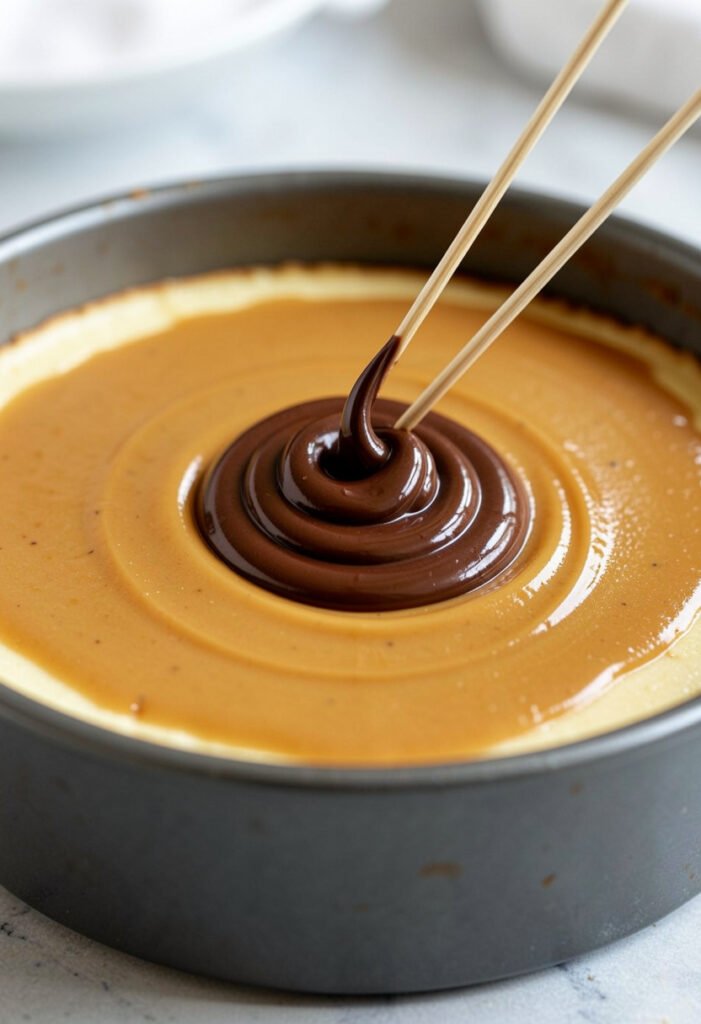
In another bowl, mix the baking cocoa powder, chocolate flavor powder (or sweetener), and 2 tablespoons of warm water until a rich, glossy chocolate sauce forms. Drizzle the chocolate sauce over the caramel layer. Take a toothpick and gently swirl the chocolate sauce into the caramel to create a marbled pattern. Place the cheesecake in the refrigerator for at least 2 to 3 hours to set completely before slicing into 4 equal portions.
Detailed Nutritional Information
| Nutrient | Per Portion (1 of 4 Slices) | Full Cheesecake Batch |
| Calories | 230 kcal | 920 kcal |
| Protein | 22 g | 88 g |
| Carbohydrates | 25 g | 100 g |
| Total Fat | 5 g | 20 g |
Chef’s Secrets for Crack-Free Protein Cheesecake
- The Steam Moisture Hack: Baking low-fat quark or Greek yogurt can cause the batter to lose moisture rapidly. Placing a cup of water inside the oven creates a humid baking environment, preventing surface tension cracks.
- Controlled Cooling: Never transfer a hot cheesecake directly to the refrigerator. Allowing it to cool gradually in the warm oven with the door propped open preserves its creamy, velvety structure.
- Psyllium Husk Stabilization: High-protein store-bought puddings can turn watery when left at room temperature. Adding a pinch of ground psyllium husk keeps the caramel layer firm and neat.
Key Takeaways
- Exceptional Macro Profile: Delivers 22g of high-quality protein per slice with only 5g of fat.
- Sweet and Salty Balance: Combines a crisp pretzel crust with smooth caramel and cocoa glaze.
- No-Crack Steam Technique: Using an oven water cup guarantees a smooth, professional finish without heavy cream cheese.
Frequently Asked Questions
Can I substitute Greek yogurt for low-fat quark?
Yes! Strained 0% fat plain Greek yogurt or Icelandic skyr makes an excellent 1:1 substitute for low-fat quark (Magerquark), offering a similarly thick texture and high protein content.
Why is a water cup needed inside the oven while baking?
Low-fat protein batters lack the high fat content of standard cream cheese, making them prone to drying out. The steam generated by the water cup maintains oven humidity, ensuring a smooth, crack-free surface.
How should I store leftover protein pretzel cheesecake?
Store the cheesecake covered in an airtight container in the refrigerator. It stays fresh, firm, and delicious for up to 4 days.
Can I freeze this high-protein cheesecake?
Freezing is not recommended for the fully assembled cheesecake, as dairy-based protein puddings and quark can change texture upon thawing. However, you can freeze individual baked cheesecake slices before adding the pudding and chocolate toppings.