
Do You Really Need to Peel Green Asparagus?
Knowing whether do you peel green asparagus before cooking is one of the most common kitchen debates. Unlike white asparagus, green asparagus grows entirely above ground in open sunlight, giving it a much thinner, delicate skin that rarely requires peeling. In most cases, snapping off the woody fibrous stem is all the prep work you need for tender, flavorful spears.
Quick Answer: Do You Peel Green Asparagus? No, you generally do not need to peel thin or medium green asparagus because its skin is soft and edible. However, for thick, mature green asparagus stalks, peeling the bottom 2 inches with a vegetable peeler removes tough outer fibers, ensuring even cooking when sautéing or roasting.
Green vs. White Asparagus: Understanding Skin Thickness
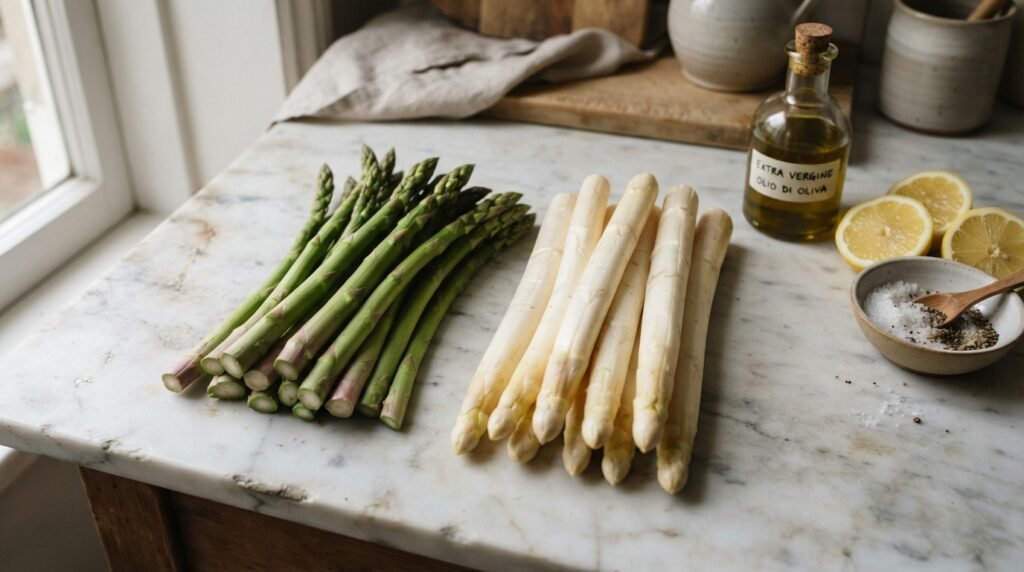
The primary reason cooks get confused about peeling asparagus comes down to the variety being cooked. White asparagus grows covered under soil mounds away from sunlight, causing it to develop a tough, bitter outer skin that must always be peeled completely from below the tip down to the base.
In contrast, green asparagus develops chlorophyll from sunlight exposure. This natural growth makes its tender skin completely edible and filled with nutrients like fiber, folate, and vitamins A, C, and K. Peeling thin green spears needlessly strips away valuable nutrition and speeds up moisture loss during cooking.
How to Prepare Green Asparagus in 3 Steps
Properly preparing green asparagus takes less than two minutes and guarantees perfectly crisp-tender stalks every time.
1. Wash and Dry Thoroughly
Rinse the asparagus spears under cool running water to remove any fine sand or grit trapped inside the triangular scales near the tip. Pat them completely dry with a kitchen towel. Excess water on the skin causes the vegetable to steam rather than sear during cooking.
2. Perform the Natural Snap Test
Hold a single asparagus spear near its base with one hand and near the middle with the other. Bend the stalk gently until it snaps naturally. The spear will break cleanly precisely where the woody, fibrous stem ends and the tender edible green stalk begins. Use this first broken stalk as a measuring guide to trim the rest of your batch evenly with a chef’s knife.
3. Peel Thick Stalks (Optional)
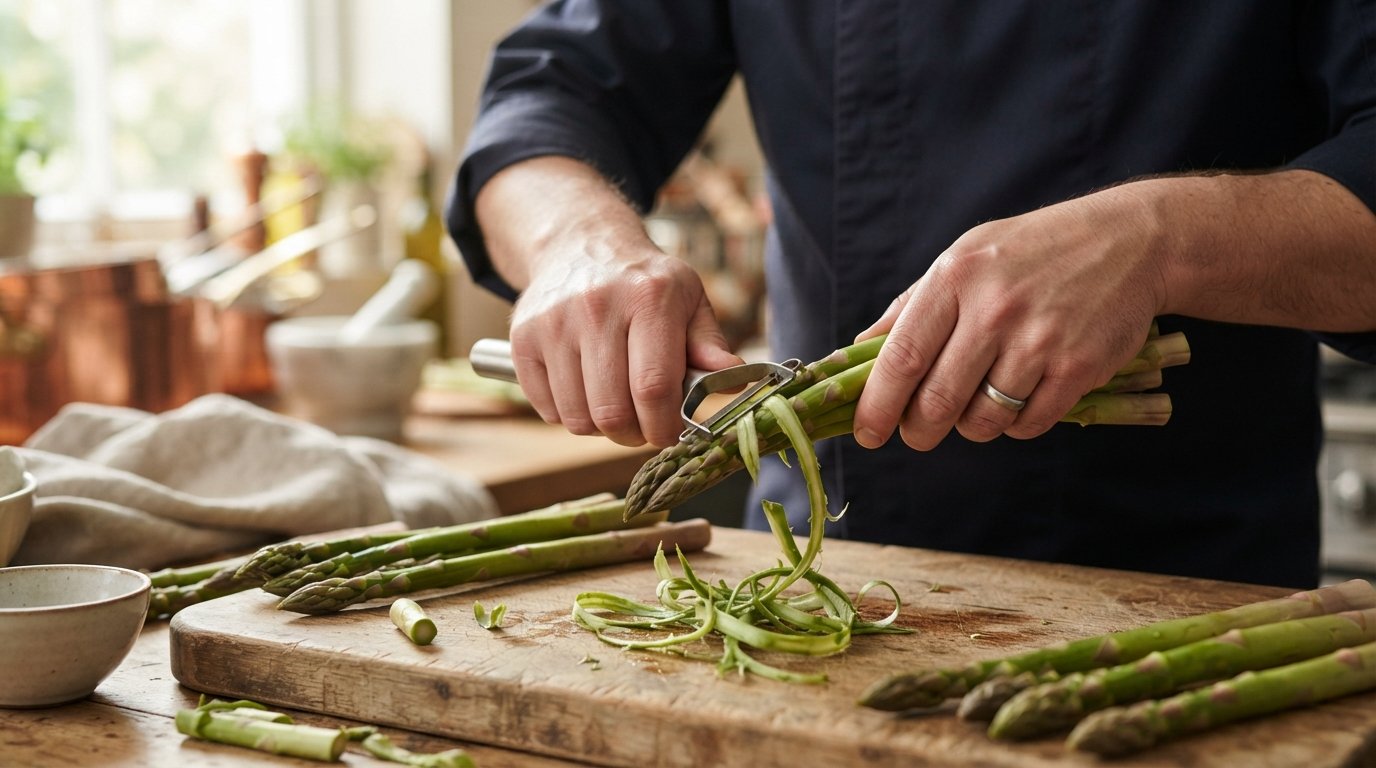
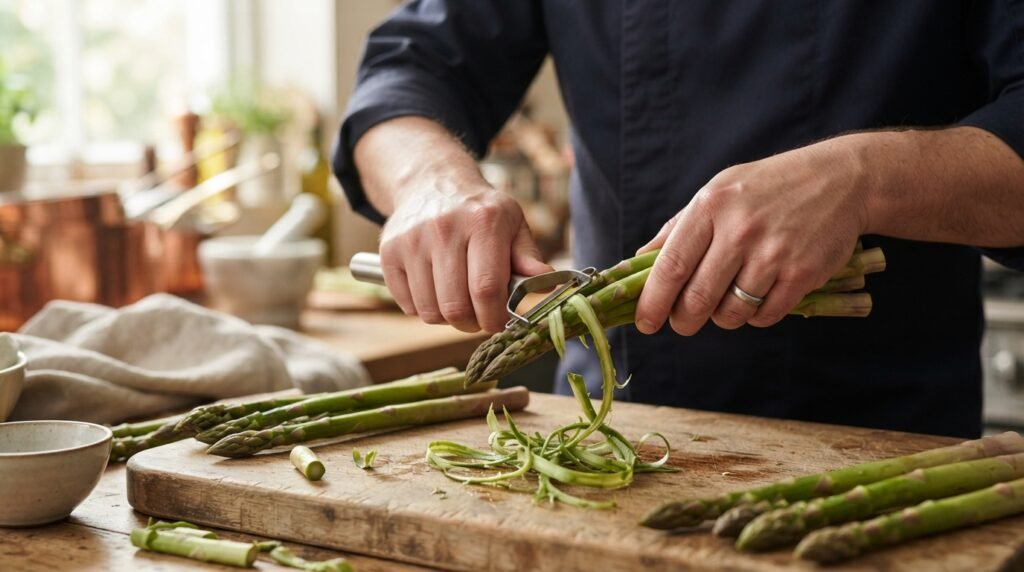
If your green asparagus stalks are thicker than a wooden pencil (about the width of a finger), use a swivel vegetable peeler to lightly shave off the outer skin from the bottom 2 inches of each spear. Leave the top two-thirds and tender tips completely untouched.
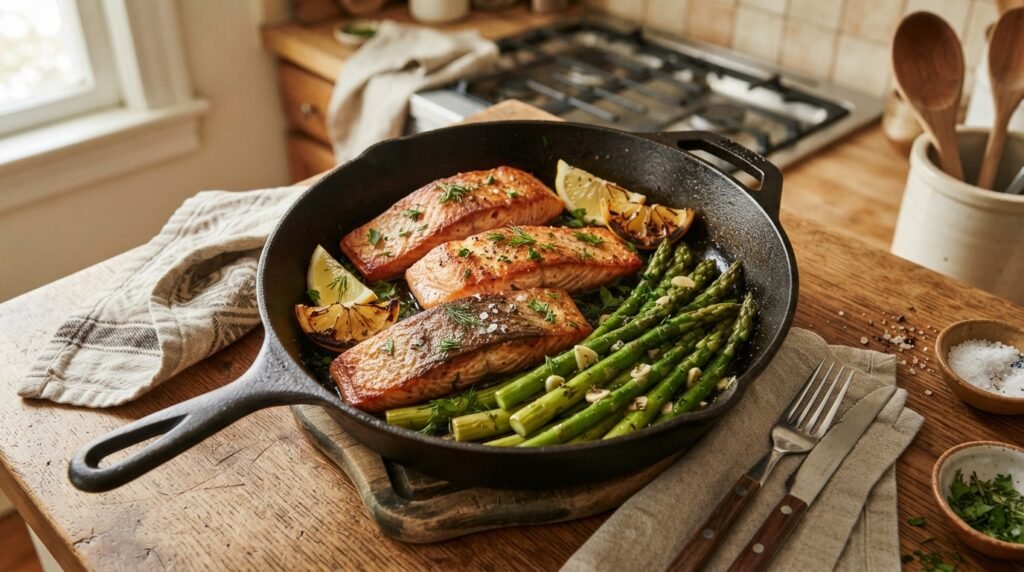
Easy Pan-Seared Salmon and Green Asparagus Skillet
Pairing tender green asparagus with crispy pan-seared salmon creates a quick, nutrient-dense 20-minute dinner.
Ingredients
- Green Asparagus: 1 bunch (approx. 400g, woody ends trimmed)
- Salmon Fillets: 2 skin-on fillets (approx. 150g each)
- Olive Oil: 2 tablespoons
- Butter: 1 tablespoon
- Garlic: 2 cloves (minced)
- Lemon: 1 fresh lemon (sliced into rounds and juice of half)
- Seasoning: Salt, black pepper, and garlic powder to taste
Cooking Steps
- Season salmon fillets on both sides with salt, pepper, and garlic powder.
- Heat 1 tablespoon of olive oil in a large skillet over medium-high heat. Place salmon skin-side down and sear for 4 to 5 minutes until skin is golden and crispy. Flip and cook for another 2 to 3 minutes, then remove to a warm plate.
- Add the remaining olive oil and butter to the same skillet. Toss in minced garlic and trimmed green asparagus spears.
- Sauté the asparagus over medium heat for 4 to 6 minutes, tossing occasionally until bright green and tender-crisp.
- Squeeze fresh lemon juice over the asparagus, return the salmon to the skillet to warm through, and serve immediately with lemon slices.
Cooking Tips for Perfect Green Asparagus
- Do Not Overcook: Asparagus turns mushy and loses its vibrant color when overcooked. Aim for a crisp-tender texture where a fork pierces the stalk easily while retaining a light snap.
- Save Trimmed Ends for Stocks: Do not throw away trimmed woody stems. Store them in a freezer bag and simmer them with vegetable or chicken stock to extract rich earthy flavor.
- High-Heat Methods Work Best: Green asparagus tastes best when roasted in an oven at 200°C (400°F) or pan-seared over high heat to create light charring on the tips.
Key Takeaways
- Peeling is Optional: Only thick, mature green asparagus stems require light peeling at the base.
- Quick Snap Method: Bend stems near the base to naturally break off tough, woody ends without guessing.
- Nutrient Rich: Keeping the skin intact preserves dietary fiber and essential vitamins.
Frequently Asked Questions (FAQ)
Is it safe to eat raw green asparagus without peeling?
Yes, raw green asparagus is safe to eat. Thinly shaving raw asparagus with a peeler makes a delicious addition to spring salads, providing a fresh, crunchy texture.
Why is the bottom of green asparagus so tough?
The lower portion of an asparagus stem contains high concentrations of lignin, a rigid structural compound that supports upright plant growth. Trimming or peeling this section eliminates woodiness.
How do I store fresh green asparagus so it stays crisp?
Trim half an inch off the bottom of the stems and stand the asparagus bundle upright in a glass container filled with an inch of clean water. Cover loosely with a plastic bag and refrigerate for up to a week.
What is the difference between green and purple asparagus prep?
Like green asparagus, purple asparagus has a soft outer skin that does not need peeling. Purple asparagus turns green when cooked and is naturally slightly sweeter due to higher sugar content.