

How to Make Easy Traditional German Mustard Eggs (Senfeier)

Creating an authentic European comfort meal on a budget does not require expensive ingredients or hours at the stove. Making a classic German mustard eggs recipe (known in Germany as Senfeier) takes under 20 minutes from prep to table. Featuring tender hard-boiled or soft-boiled eggs sat atop warm, buttery potatoes and coated in a velvety, sweet-and-savory mustard sauce, this traditional dish remains one of Central Europe’s most beloved midweek dinners.
Quick Answer: German Mustard Eggs Recipe To make German mustard eggs (Senfeier), melt 25g butter in a saucepan, sauté 1 finely diced onion until soft, and whisk in 25g flour to form a light roux. Deglaze with 300ml vegetable broth and 300ml milk, stirring until thickened. Stir in 3 to 5 tablespoons of sweet German mustard, season with salt and pepper, and pour over halved boiled eggs and boiled potatoes.
Why This 20-Minute German Comfort Food Recipe Is Trending
Originating as a hearty, economical dish across Germany and Eastern Europe, Senfeier has experienced a major resurgence among home cooks seeking high-protein, budget-friendly meals. By transforming basic pantry staples—eggs, potatoes, milk, and mustard—into a restaurant-quality meal, this recipe balances tangy acidity with silky creaminess.
Traditional home recipes often struggle with harsh mustard bitterness or curdled dairy sauce. However, using a classic roux foundation combined with a blend of sweet Bavarian mustard (Süßer Senf) and vegetable stock guarantees a smooth texture that clings perfectly to potatoes and egg yolks. The contrast between rich egg yolk and zest from the mustard sauce makes this dish a staple for quick weeknight dinners and vegetarian-friendly family meals.
Ingredients & Flavor Pairing Mechanics
Simplicity defines traditional German cooking. Understanding the functional role of each ingredient ensures your mustard sauce achieves the ideal glossy sheen without breaking.
| Ingredient | Quantity | Functional Purpose |
| Eggs | 4–6 large | Hard or soft-boiled; serves as the primary protein base. |
| Potatoes | 500g (1.1 lbs) | Waxy or all-purpose potatoes boiled to absorb the savory sauce. |
| Butter | 25g (~5 tsp) | Creates the rich fat base for the roux and sautés onions. |
| Yellow Onion | 1 small (finely diced) | Adds aromatic sweetness to balance the tang of mustard. |
| All-Purpose Flour | 25g (~5 tsp) | Binds fats and liquids into a stable, thickened velouté. |
| Vegetable Broth | 300ml (1.25 cups) | Provides underlying umami and savory depth. |
| Milk | 300ml (1.25 cups) | Softens the sharpness of stock and adds velvety creaminess. |
| Sweet German Mustard | 3–5 tbsp | Key flavor agent; provides mild sweetness and signature bite. |
| Chives & Parsley | 1 tbsp each (chopped) | Fresh herbs for garnish, herbal aroma, and visual color contrast. |
Step-by-Step Instructions: How to Cook Senfeier
Step 1: Boil the Potatoes and Eggs
Place peeled, quartered waxy potatoes into salted cold water. Bring to a boil and cook for 15 to 20 minutes until fork-tender. In a separate saucepan, boil 4 to 6 eggs to your preferred doneness (6 to 7 minutes for a creamy center, 9 to 10 minutes for hard-boiled). Shock eggs in ice water, peel, and halve lengthwise. [internal link: guide to boiling perfect eggs every time]
Step 2: Sauté Onions and Cook the Roux
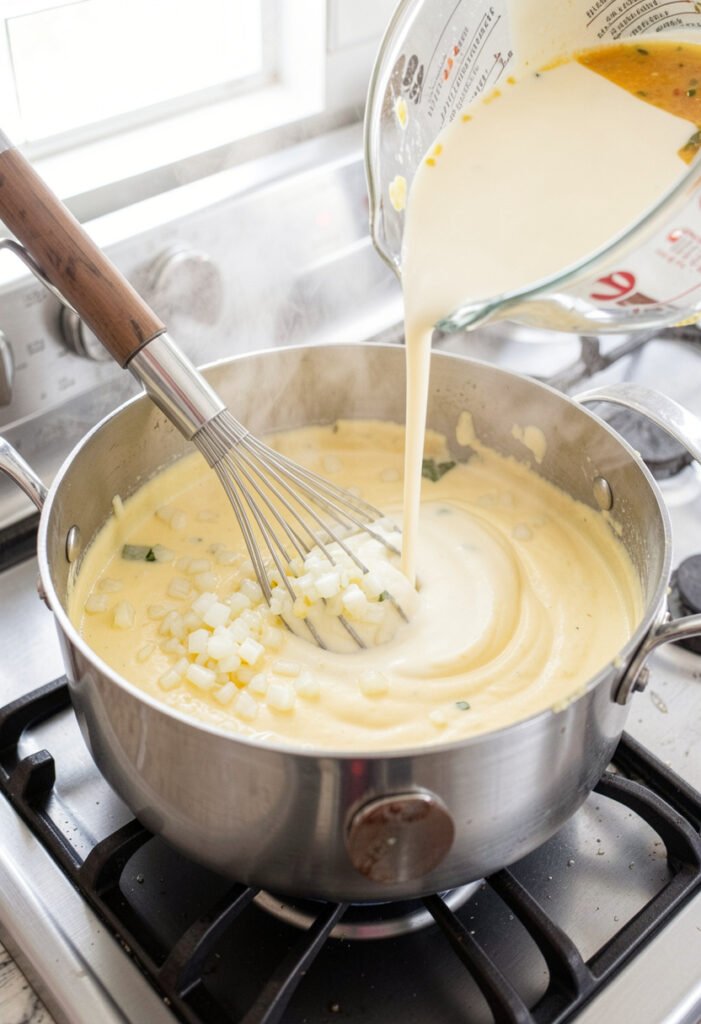
Melt 25g of butter in a medium saucepan over medium heat. Add the finely chopped onion and cook for 3 to 4 minutes until translucent and soft without browning. Sprinkle 25g of all-purpose flour over the onions and whisk continuously for 1 to 2 minutes to cook out the raw flour taste while maintaining a light golden color.
Step 3: Deglaze and Simmer
Slowly pour in 300ml of vegetable broth while whisking vigorously to break up any flour clumps. Once smooth, stream in 300ml of milk. Bring the mixture to a gentle simmer, stirring constantly as the starches expand. Allow the sauce to bubble gently for 4 to 5 minutes until it coats the back of a spoon.
Step 4: Temper and Incorporate Mustard
Lower the heat to low. Whisk in 3 to 5 tablespoons of sweet German mustard (Süßer Senf). Season generously with sea salt, freshly cracked black pepper, and an optional pinch of ground nutmeg. Simmer for another minute, removing from heat promptly to ensure the heat does not dull the complex mustard aromatics.
Step 5: Plate and Garnish
Arrange warm boiled potatoes on one side of a wide rimmed bowl and place halved eggs on the other. Generously ladle the velvety hot mustard sauce directly over the eggs and potatoes. Garnish the eggs with finely chopped chives and sprinkle fresh parsley over the potatoes before serving warm.

Pro-Tips for Maximum Flavor & Sauce Stability
- Choose the Right Mustard: Authentic German Senfeier relies heavily on German sweet mustard (Süßer Senf). If unavailable, combine 3 tablespoons of mild yellow mustard or Dijon with 1 tablespoon of honey or brown sugar.
- Prevent Sauce Curdling: Never add mustard to boiling dairy at maximum heat. Always turn the flame to low or remove the pan from heat entirely before stirring in mustard to keep the emulsion silky smooth.
- Potato Selection: Choose waxy potato varieties (such as Yukon Gold or Red potatoes) because they hold their shape when smothered in heavy sauce, rather than turning mushy.
Key Takeaways
- Fast & Budget-Friendly: A complete, wholesome meal ready in under 20 minutes using inexpensive kitchen staples.
- Balanced Flavor Profile: Pairs rich egg yolks and comforting potatoes with a sweet, tangy, aromatic mustard sauce.
- Key Technique: Whisk the flour roux thoroughly before streaming in broth and milk to avoid clumps, whisking mustard in at low heat.
- Serving Suggestion: Best enjoyed hot with a fresh green side salad to cut through the rich sauce.
FAQ
What is the best type of mustard for German mustard eggs?
Traditional German recipes use sweet Bavarian mustard (Süßer Senf). However, you can use a 50/50 mix of mild yellow mustard and Dijon mustard, adjusted with a teaspoon of honey to replicate the authentic flavor.
Can I make mustard egg sauce ahead of time?
Yes! You can prepare the sauce up to 2 days in advance. Store it in an airtight container in the refrigerator and gently reheat over low flame, adding a splash of fresh milk if it thickens too much.
Why did my mustard sauce turn out bitter?
Mustard becomes bitter when boiled at high heat for too long. Always stir in your mustard at the very end of cooking over low heat, and ensure you cook out the flour taste during the initial roux step.
What side dishes pair well with Senfeier?
Boiled salted potatoes are the classic pairing. However, you can also serve mustard eggs over buttered rice, mashed potatoes, or alongside a crisp cucumber and dill salad.