
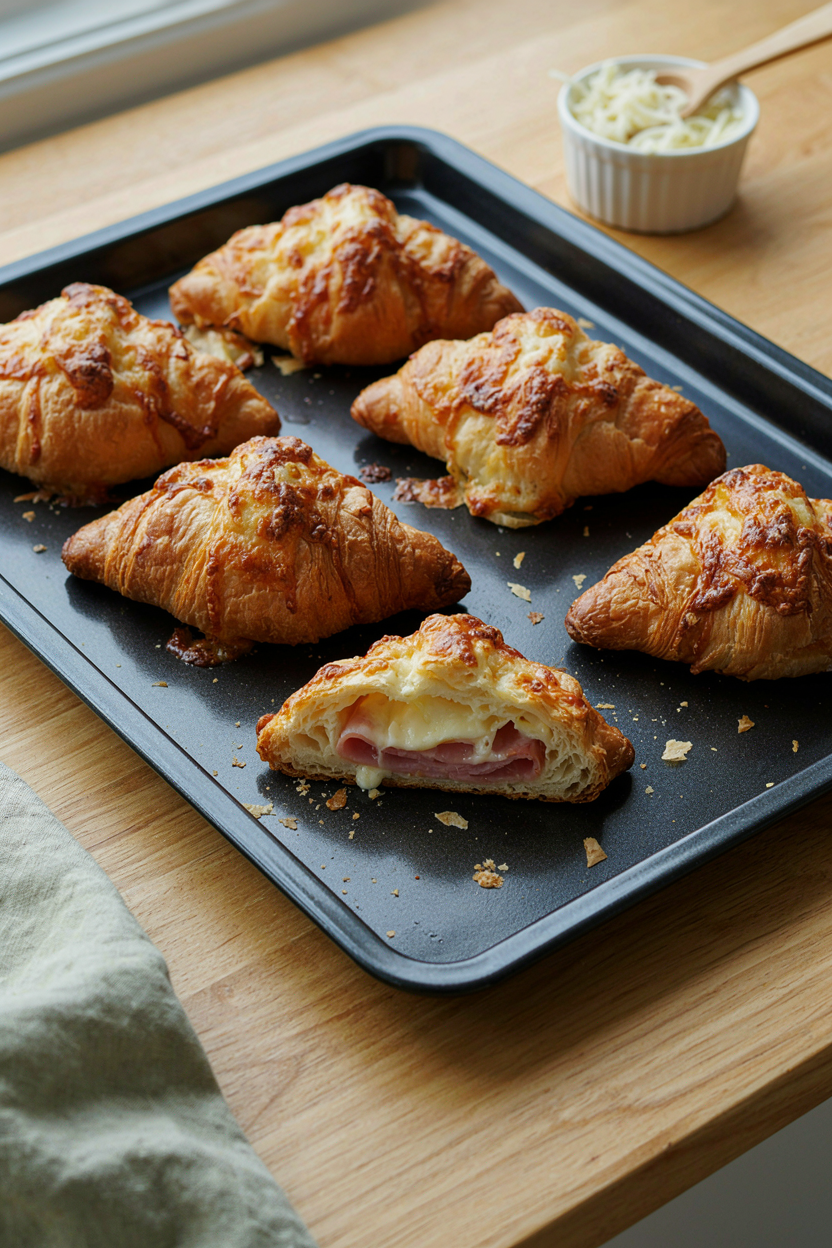
How to Make High-Protein Ham and Cheese Croissants
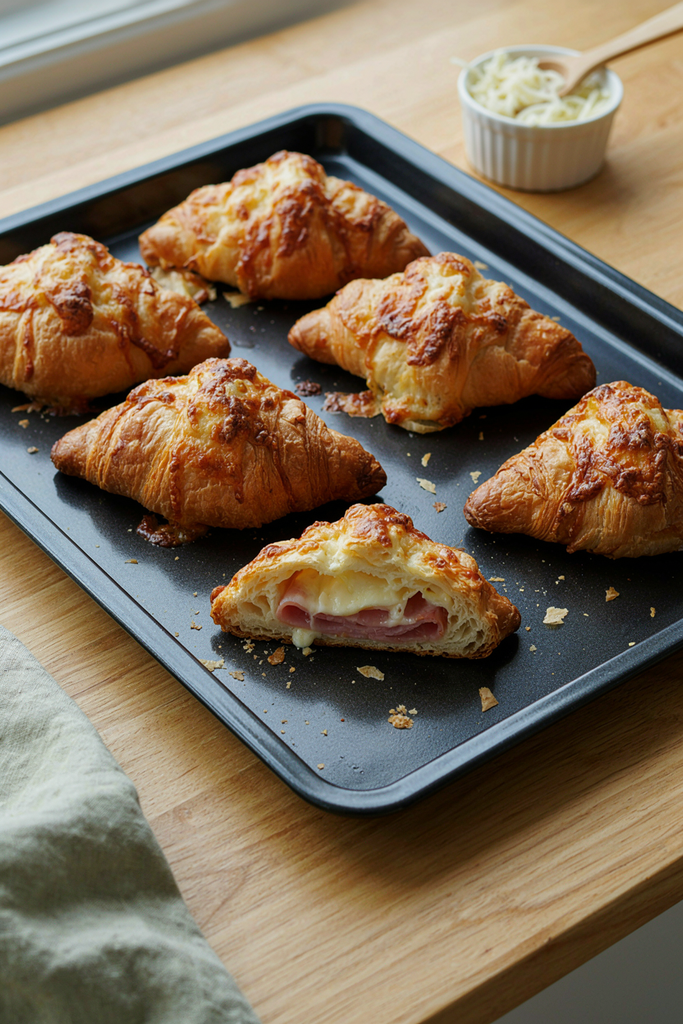
High protein ham cheese croissants are made using a simple 3-ingredient yeast-free dough consisting of low-fat quark (or Greek yogurt), baking powder, and whole grain spelt flour. Filled with lean poultry ham and light shredded cheese, these savory pastries yield 6 portions and bake at 320°F (160°C) for 45 minutes, delivering up to 36 grams of protein per serving.
Reimagining Classic Pastries for Fitness Goals
Traditional french croissants rely on extensive layering of cold butter between layers of yeast dough, producing a flaky texture that is exceptionally dense in fat and refined carbohydrates. For individuals tracking macronutrients or aiming for sustainable weight loss, classic pastries rarely fit daily nutritional targets.
Swapping butter-heavy puff pastry for a high-protein quark dough eliminates the need for long resting times and yeast rising phases. Low-fat quark provides a moist, pliable dough consistency while boosting protein content naturally. When paired with sliced chicken breast ham and reduced-fat cheese, you achieve a savory, warm breakfast pastry that supports muscle recovery and long-lasting satiety.
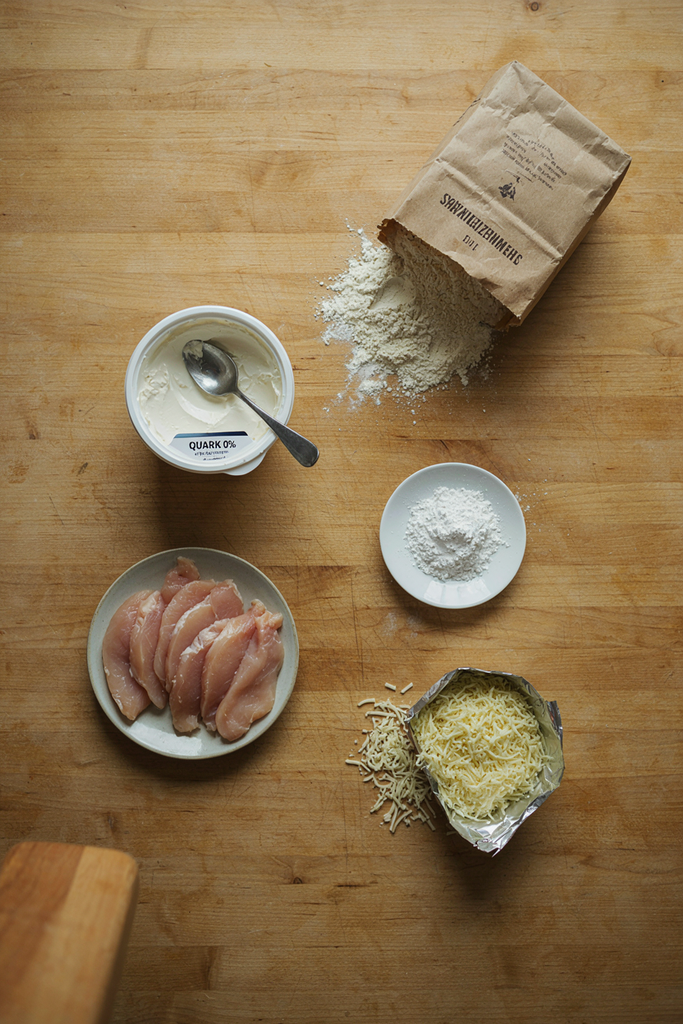
Required Ingredients and Macronutrient Options
Simple Quark Dough Base
- Low-Fat Quark: 500 grams low-fat quark (skim milk curd cheese) or ultra-thick plain non-fat Greek yogurt.
- Baking Powder: 1 packet (approximately 2 teaspoons or 7 grams) baking powder.
- Spelt Flour: 300 grams spelt flour (or 220 grams spelt flour mixed with 80 grams unflavored liquid protein cream or unflavored protein powder).
- Seasoning (Optional): A pinch of sea salt, garlic powder, or Italian herbs kneaded directly into the dough.
Savory Interior and Exterior Toppings
- Interior Light Shredded Cheese: 50 grams light reduced-fat shredded cheese (such as low-moisture Mozzarella or light Gouda).
- Lean Poultry Ham: 100 grams sliced fitness chicken breast ham or lean turkey ham.
- Exterior Light Shredded Cheese: 100 grams light reduced-fat shredded cheese for topping before baking.
Step-by-Step Preparation and Baking Guide
Step 1: Knead the Yeast-Free Dough
In a large mixing bowl, combine the low-fat quark, baking powder, and spelt flour (along with optional salt or seasonings). Use your hands or a stand mixer with a dough hook to knead the ingredients until a smooth, cohesive dough ball forms. If using protein cream or powder, add it alongside the reduced flour amount and knead until fully incorporated.
Step 2: Roll and Shape the Dough
Lightly dust a clean countertop or parchment paper with a sprinkle of flour. Roll the dough out into a large, thin circle roughly 14 inches in diameter.
Step 3: Layer the Fillings
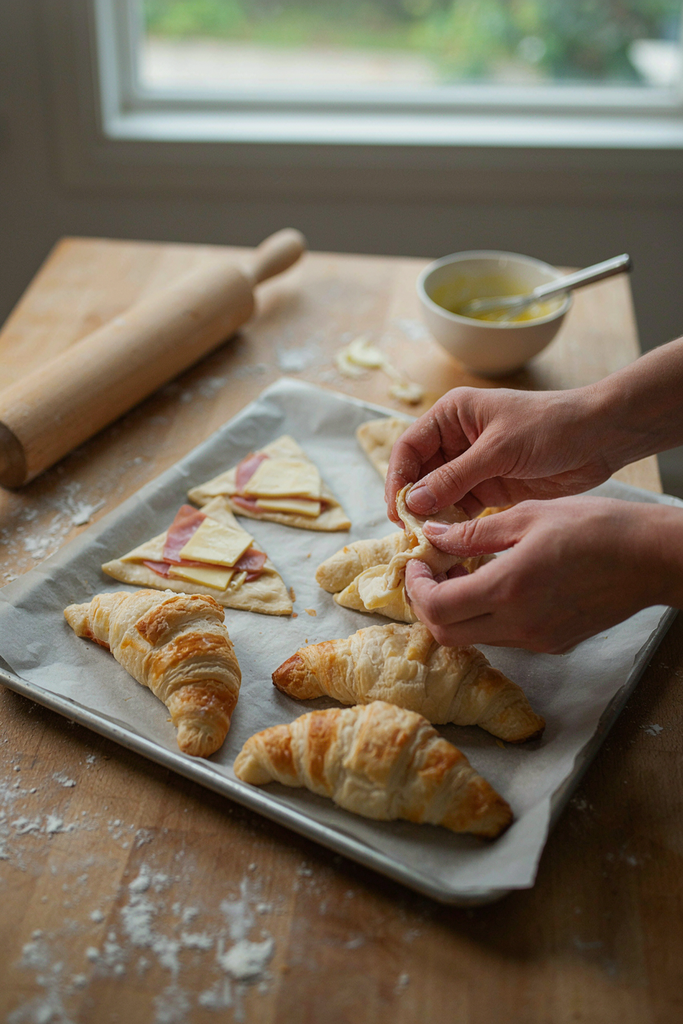
Evenly scatter 50 grams of light shredded cheese across the surface of the rolled dough circle. Arrange the 100 grams of sliced lean chicken breast ham uniformly over the cheese layer.
Step 4: Slice and Roll the Croissants
Using a pizza cutter or sharp knife, slice the round dough into 6 equal triangular wedges, radiating from the center out to the edge like a pizza. Starting from the wide outer edge of each triangle, roll the dough tightly inward toward the pointed center tip to form a classic crescent shape.
Step 5: Top and Bake
Transfer the 6 rolled croissants onto a baking sheet lined with parchment paper. Evenly sprinkle the remaining 100 grams of light shredded cheese over the tops of the croissants. Place in a preheated oven set to 320°F (160°C) upper and lower top/bottom conventional heating. Bake for 45 minutes until the pastry crust is firm, golden brown, and the melted cheese top forms a crispy shell.
Grocery Sourcing and Delivery Options
Finding specialized fitness ingredients such as low-fat quark, lean poultry ham, and light reduced-fat cheese is quick and convenient through modern grocery delivery platforms. Ordering fresh dairy items and high-protein baking staples directly to your doorstep keeps your kitchen prepared for weekly fitness meal prep without extra shopping trips.
If your schedule leaves no time for baking from scratch, local health cafes and artisanal bakeries frequently list high-protein savory wraps, low-fat breakfast pastries, and egg white sandwiches on meal delivery apps. Having a warm, high-protein breakfast delivered directly to your home or office offers an effortless alternative on busy mornings.
Pro Baking Tips for Optimum Structure
- Moisture Control: Low-fat quark contains varying moisture levels depending on the brand. If your dough feels overly sticky after kneading, add 1 to 2 extra tablespoons of spelt flour until it releases cleanly from your hands.
- Yogurt Substitution: If substituting Greek yogurt for low-fat quark, strain the yogurt through a coffee filter or cheesecloth for 15 minutes to remove excess whey, ensuring the dough maintains its structural integrity.
- Even Baking: Baking at a moderate temperature of 320°F (160°C) for 45 minutes allows the dense quark dough to cook through completely to the center without burning the cheese topping.
Key Takeaways
- Massive Protein Profile: Delivers 27g to 36g of protein per croissant depending on whether protein cream is added to the dough.
- No Waiting Time: Yeast-free 3-ingredient dough requires zero proofing or rising time before rolling and baking.
- Nutritional Control: Keeps fat content as low as 5g to 6g per pastry while remaining low in total calories (~323–329 kcal).
- Meal Prep Friendly: Reheats exceptionally well in an air fryer or toaster oven for quick weekday breakfasts.
Frequently Asked Questions
Can I replace low-fat quark with cottage cheese?
Yes. You can use low-fat cottage cheese, but you must blend it in a food processor or blender until completely smooth before mixing it into the flour to avoid lumps in the dough base.
How do I store and reheat leftover protein croissants?
Store baked croissants in an airtight container in the refrigerator for up to 4 days. Reheat in an oven or air fryer at 350°F (175°C) for 3 to 5 minutes to restore the crispy outer cheese crust.
What is the purpose of baking powder in a yeast-free dough?
Baking powder acts as the sole leavening agent. It reacts with the natural acidity in the low-fat quark during baking, creating air pockets that expand the dough and keep it soft inside.
Can I freeze these croissants before or after baking?
It is best to freeze them after baking and cooling completely. Wrap individual croissants in foil and freeze for up to 1 month. Thaw in the refrigerator overnight and reheat in the oven before eating.