
This Potato and Feta Bake Uses a German Trick: Baking It Like a Quiche
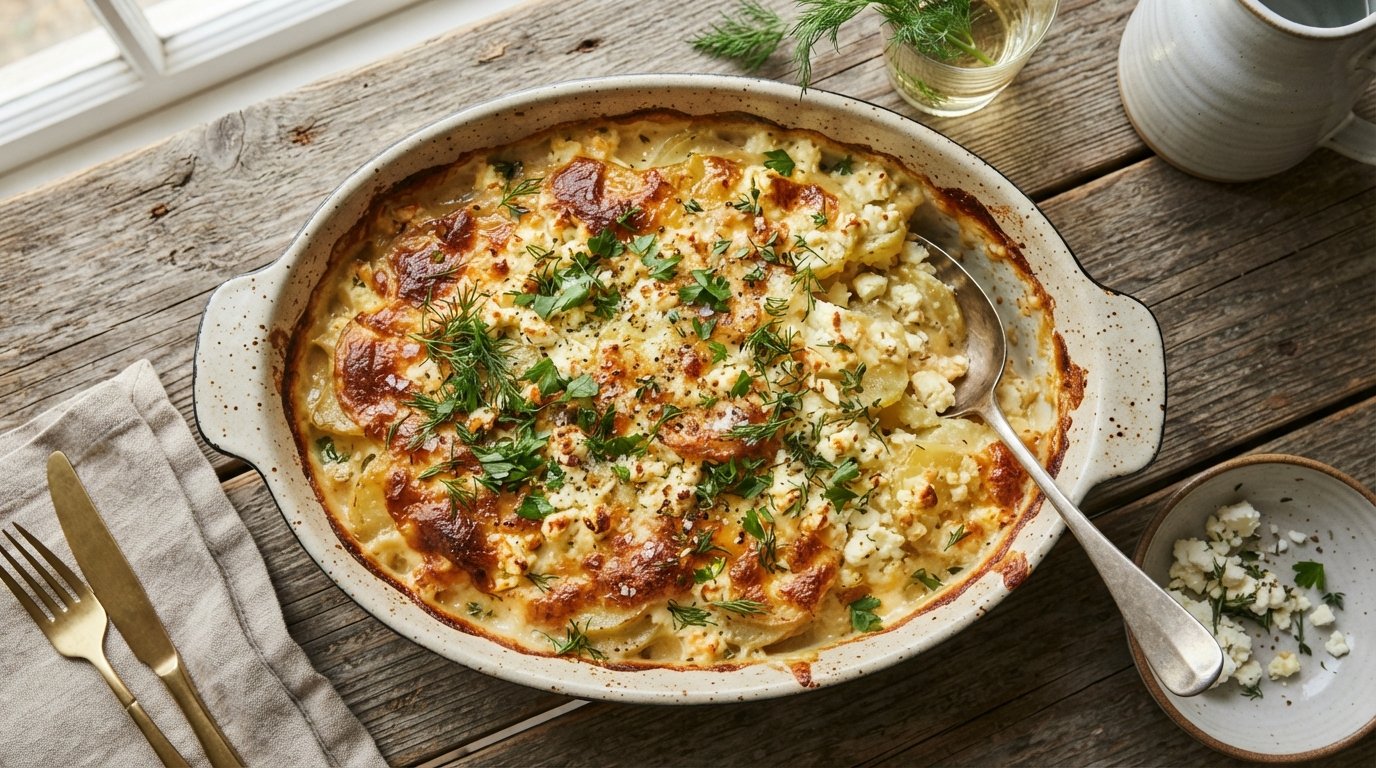
Potato feta casserole doesn’t have to mean roasting a block of feta with olive oil until it melts, the way the viral baked-feta trend does it. The German version — an Auflauf — takes a different, simpler route: thin potato slices layered with crumbled feta, then covered in a light egg-and-cream custard and baked until the whole dish sets, similar in principle to a crustless quiche.
What Is an “Auflauf,” and How Is It Different from Other Potato-Feta Bakes?
“Auflauf” is the German word for a baked casserole, and it covers a huge range of dishes, but the technique behind most savory versions is consistent: layer the main ingredients in a baking dish, pour a simple egg-and-dairy mixture over the top, and bake until that custard sets and binds everything together. It’s a lighter, faster method than a French-style gratin, which typically relies on a pre-made béchamel sauce poured between layers.
That distinction matters here because most potato-and-feta recipes currently trending online come from a different direction entirely: the viral baked-feta-pasta trend, reimagined with potatoes instead of pasta, where a whole block of feta gets roasted alongside oiled potatoes until it melts into a spreadable topping. That’s a genuinely different dish — more of a roasted, mashed-together side than a set casserole. This German-style version keeps the potatoes in distinct layers, uses crumbled rather than block feta, and relies on the egg custard (not melted cheese) to hold everything together, giving you a sliceable, quiche-like texture instead of a roasted, mashed one.
Quick answer: A potato feta casserole made the German way (“Auflauf”) layers thin potato slices with crumbled feta, then bakes them in a simple egg-and-cream custard until set and golden — closer to a crustless quiche than the roasted, melted-feta version popularized by the baked-feta-pasta trend.
What You’ll Need
- Potatoes (waxy or all-purpose varieties hold their shape best), sliced thin
- Feta cheese, crumbled
- Eggs
- Heavy cream or a mix of cream and milk
- 1 onion, thinly sliced
- 1–2 garlic cloves, minced
- Olive oil or butter for the dish
- Salt, pepper, and a pinch of nutmeg
- Fresh herbs (dill, parsley, or chives) to finish
This is a flexible, pantry-friendly ingredient list built around potatoes and feta as the anchors — the custard ratio and seasoning are easy to adjust to taste, and the technique tolerates substitutions well.
How to Make Potato Feta Casserole
- Slice the potatoes thin. Peel the potatoes if you like, then slice them into thin, even rounds — a mandoline makes this faster and more consistent, but a sharp knife works fine. Even thickness matters more than exact thinness, since uneven slices cook unevenly.
- Sauté the onion and garlic. Soften the sliced onion and minced garlic in a little olive oil or butter until translucent, which takes the raw edge off before they go into the bake.
- Layer the potatoes and feta. In a greased baking dish, layer the potato slices with the softened onion and garlic and the crumbled feta, seasoning lightly with salt, pepper, and a small pinch of nutmeg between layers. Two or three layers works well for an even distribution of cheese throughout.
- Make the custard. Whisk together the eggs and cream (or cream-and-milk mixture) until smooth, then season lightly — remember the feta is already salty, so go easy on additional salt here.
- Pour the custard over the layers. Pour the egg-cream mixture evenly over the layered potatoes, letting it settle down through the layers. Gently press down on the potatoes if needed to help the custard reach the bottom layers.
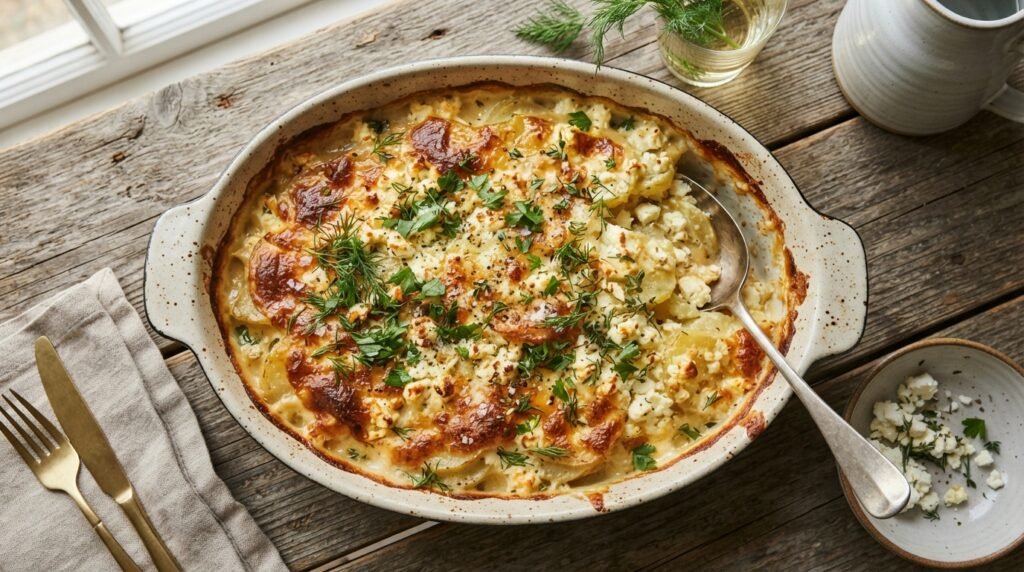
- Bake until set. Bake in a moderate oven until the potatoes are tender when pierced with a knife and the top is golden and the custard has fully set rather than jiggling in the center. This typically takes about 45–60 minutes depending on the thickness of your layers.
- Rest before slicing. Let the casserole rest for 10–15 minutes after baking — this lets the custard finish setting so you get clean slices instead of a dish that falls apart when served.
Technique note: the custard-to-potato ratio is what determines whether this comes out closer to a firm, sliceable casserole or a softer, creamier one. If you prefer clean slices, use a slightly higher proportion of eggs to cream; for a softer, spoonable texture, lean more toward cream.

Why Bother With the Custard Instead of Just Roasting Everything?
The roasted, melted-feta approach that’s currently trending is genuinely easier — fewer steps, less equipment, less to think about. But it produces a different result: a soft, somewhat mashed-together side dish rather than something you can cut into clean slices and serve as a main course. The custard-based Auflauf method takes a bit more prep (mainly the egg mixture and the layering), but it turns potatoes and feta into something closer to a savory pie or quiche — sturdy enough to serve as a main dish alongside a salad, and good served warm or at room temperature, which makes it a genuinely useful make-ahead option.
Key Takeaways
- A German-style potato feta Auflauf layers thin potato slices and crumbled feta, then bakes them in an egg-and-cream custard until set — a different technique from the roasted, melted-block-feta trend.
- The custard, not melted cheese, is what binds the dish together and gives it a sliceable, quiche-like texture.
- Sautéing the onion and garlic before layering removes their raw edge and adds more depth than adding them raw.
- Letting the casserole rest for 10–15 minutes after baking is what gives you clean slices instead of a dish that falls apart.
- Adjusting the ratio of eggs to cream lets you control whether the finished dish is firmer and sliceable or softer and creamier.
Variations and Tips
- Add greens: wilted spinach or sautéed zucchini layered in with the potatoes adds color and nutrition without changing the technique.
- Swap the cheese ratio: a mix of feta and a milder melting cheese, like a light Gouda, softens the tang if you want a milder dish.
- Make it ahead: this casserole reheats well, making it a solid make-ahead option for a weeknight dinner or a casual gathering.
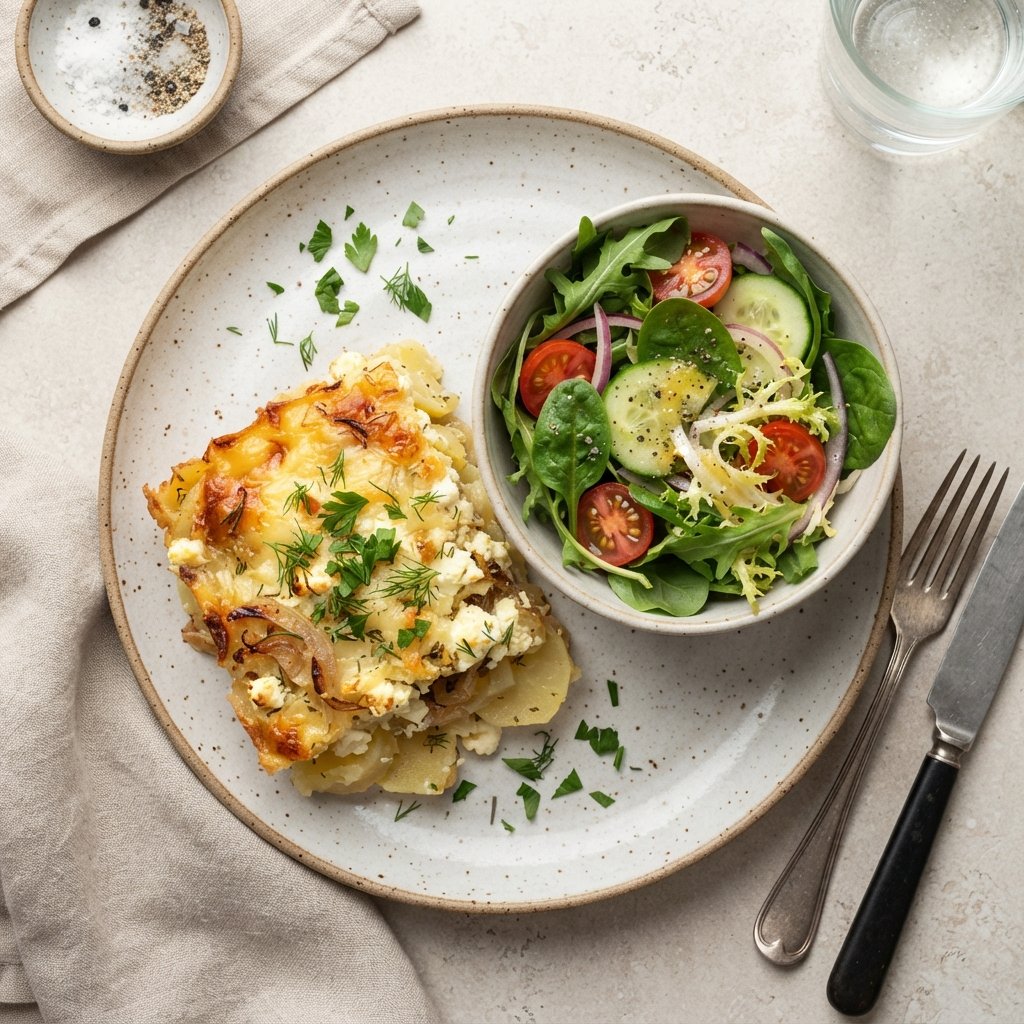
- Serving suggestion: serve alongside a simple green salad or steamed vegetables to round out the meal, since the casserole itself is fairly rich.
This potato feta casserole leans on a genuinely different technique from what’s currently trending online — the custard-based Auflauf method turns two simple ingredients into something you can slice and serve as a real main course, not just a melty side dish.
FAQ
What is a German “Auflauf”?
An Auflauf is a German baked casserole made by layering ingredients in a dish and pouring an egg-and-dairy custard over the top before baking until it sets, similar in principle to a crustless quiche.
Is this the same as the viral baked feta pasta trend?
No. The viral trend roasts a block of feta with oiled potatoes or pasta until the cheese melts and gets stirred through, creating a soft, mashed-together dish. This German-style casserole layers crumbled feta between potato slices and binds everything with an egg-cream custard, giving a sliceable, set texture instead.
Do I need to boil the potatoes before baking?
No, thinly sliced raw potatoes cook through in the oven as the custard bakes, as long as the slices are cut evenly and thin enough.
Can I use a different cheese instead of feta?
Yes. A mix of feta with a milder melting cheese, such as Gouda, works well if you want to soften the tang, though feta’s saltiness and texture are what define the traditional flavor.
Can I make this casserole ahead of time?
Yes. It reheats well and can be made a day ahead, making it a practical option for meal prep or entertaining.
How do I know when the casserole is fully baked?
The potatoes should be tender when pierced with a knife, the top should be golden, and the custard should be fully set rather than jiggling in the center.