
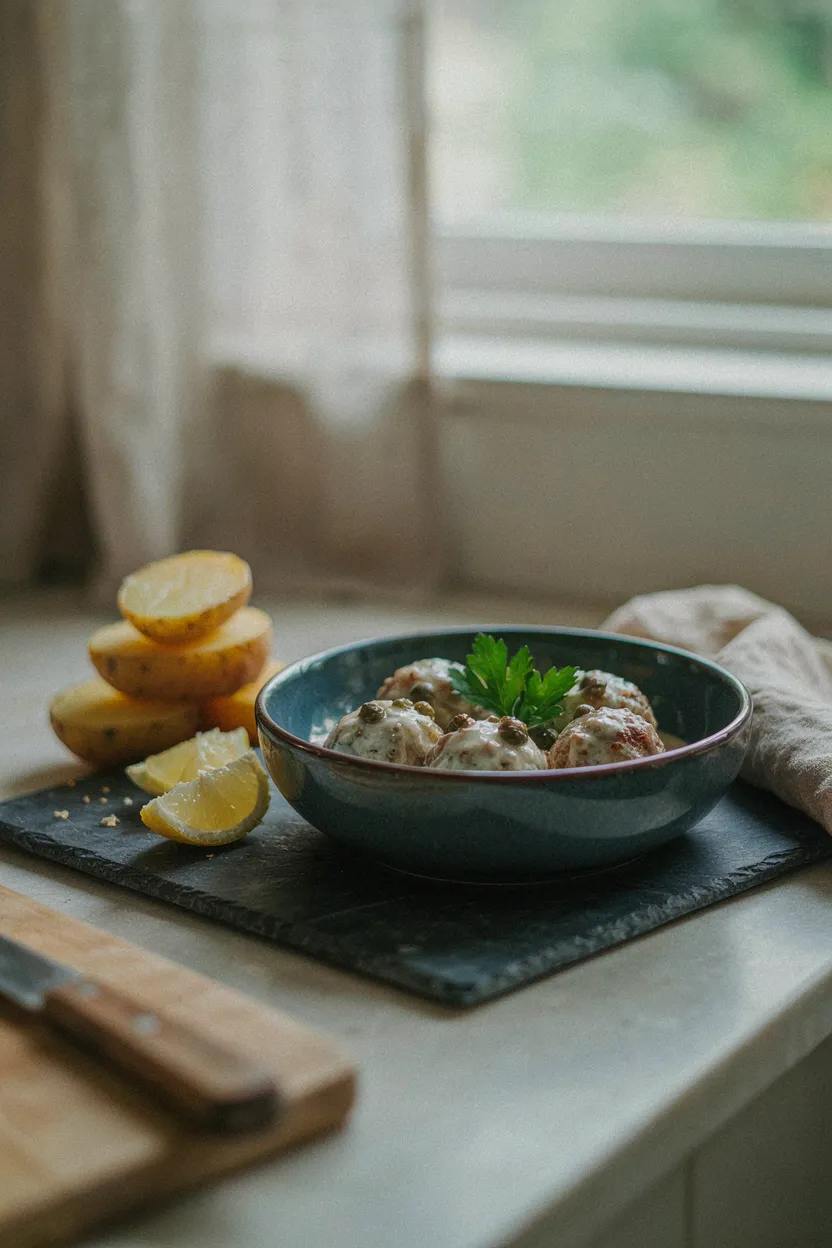
How to Make Authentic German Meatballs in Creamy Caper Sauce
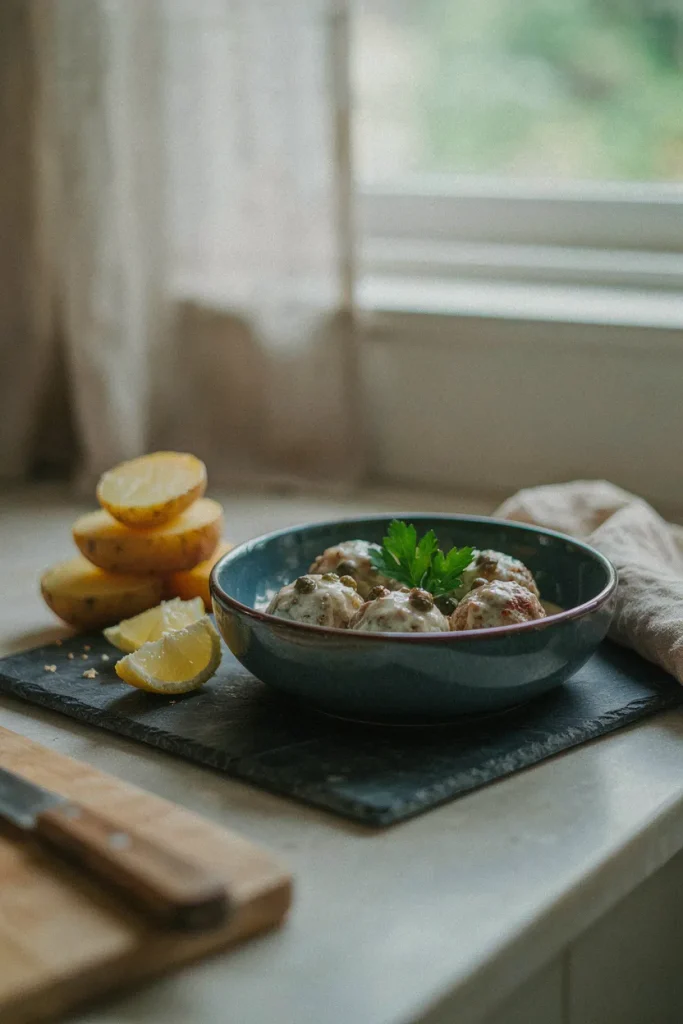
Making traditional German meatballs in caper sauce involves poaching tender ground beef and pork meatballs in a fragrant onion, bay leaf, and peppercorn broth. Straining the stock to build a classic butter-flour roux enriched with heavy cream, tangy capers, lemon juice, and tempered egg yolk creates a silky, savory white sauce that coats each meatball perfectly.
Mastering Heritage Comfort Food with Proper Poaching Technique
Unlike Italian meatballs that are fried or baked, traditional German meatballs rely on gentle poaching to maintain an exceptionally soft, melt-in-your-mouth texture. Simmering ground meat in a seasoned onion and herb broth cooks the meatballs evenly while infusing the broth with natural savory juices.
This flavorful broth serves a dual purpose as the primary liquid base for the velvet caper sauce. Combining butter and flour into a classic blond roux, whisking in the strained poaching broth, and finishing with heavy cream, tangy capers, lemon juice, and tempered egg yolk yields a glossy sauce with a gentle acidity that balances the rich meat.
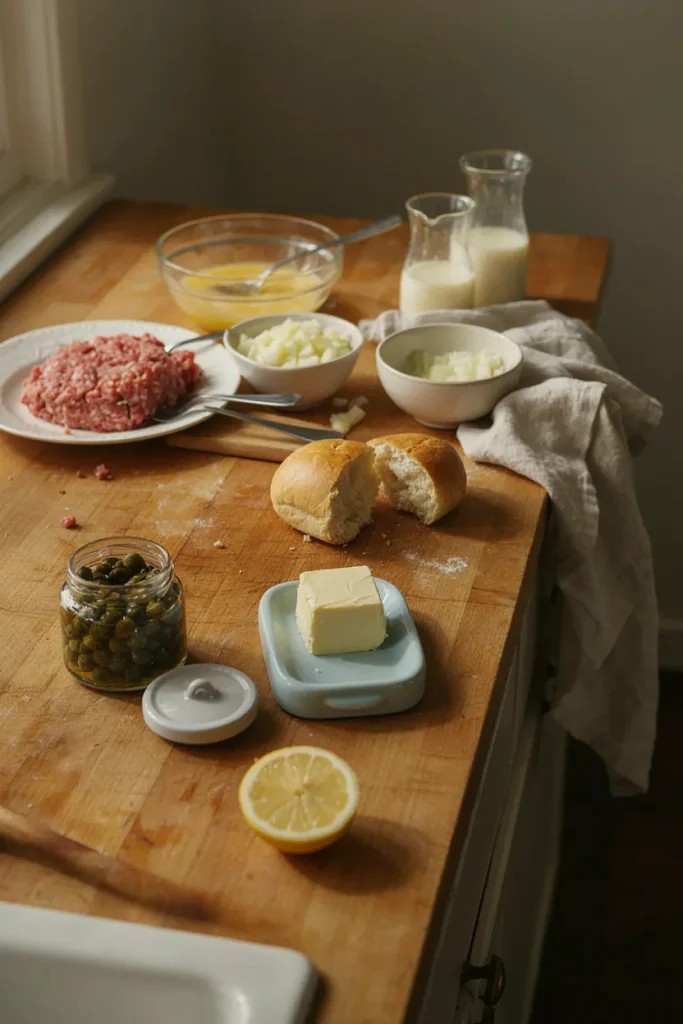
Essential Ingredients and Precise Quantities
Meatball Mixture
- Ground Meat: 500 grams mixed ground beef and pork (50/50 blend).
- Egg: 1 large egg.
- Onion: 1 medium yellow onion, finely grated and squeezed of excess liquid.
- Breadcrumbs & Bread: 2 tablespoons breadcrumbs plus 1 white bread roll (soaked in warm water and squeezed dry).
- Anchovies (Optional Umami Boost): 2 anchovy fillets, minced finely (or 1 teaspoon anchovy paste).
- Mustard (Optional): 1 teaspoon yellow or Dijon mustard.
- Seasoning: Salt, freshly ground black pepper, and a pinch of ground nutmeg.
Poaching Broth
- Water: 2 liters water.
- Onion: 1 whole yellow onion (peeled, left whole or halved).
- Herbs & Spices: 2 bay leaves, 8 whole black peppercorns, and 1 teaspoon salt.
Creamy Caper Sauce
- Roux Base: 40 grams butter and 40 grams all-purpose flour.
- Broth Base: 500 to 600 milliliters strained poaching broth.
- Dairy: 100 to 150 milliliters heavy cream.
- Capers: 35 grams capers with 1 to 2 tablespoons caper brine.
- Acidity: 1 to 2 teaspoons fresh lemon juice.
- Binder: 1 egg yolk (for tempering).
- Seasoning: Salt, black pepper, and ground nutmeg to taste.
Step-by-Step Preparation Guide
Step 1: Prepare the Poaching Broth
In a large pot, combine 2 liters of water, 1 whole onion, bay leaves, peppercorns, and salt. Bring to a rolling boil over high heat, then reduce heat to low and let it simmer for 15 minutes to allow the aromatic herbs to infuse the water.
Step 2: Form the Meatballs
Soak the bread roll in warm water for 5 minutes, then squeeze out all excess liquid thoroughly. In a large mixing bowl, combine 500 grams ground meat, 1 egg, finely grated onion, soaked bread, breadcrumbs, minced anchovies, mustard, salt, pepper, and nutmeg. Mix gently until fully combined, then roll into 8 to 10 medium, smooth meatballs.
Step 3: Poach the Meatballs
Gently lower the meatballs into the barely simmering broth. Do not boil, as rapid bubbles will break the delicate meatballs apart. Simmer gently over low heat for 15 to 20 minutes until fully cooked through. Remove meatballs with a slotted spoon and set aside covered. Strain and reserve 600 milliliters of hot broth.
Step 4: Make the Creamy Caper Sauce
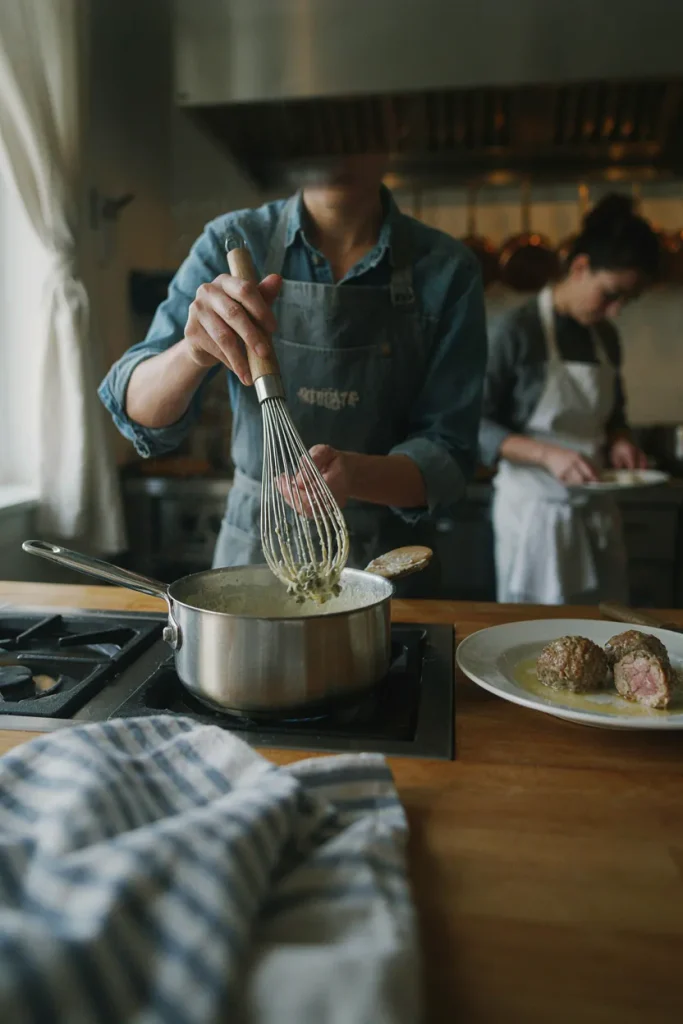
Melt 40 grams butter in a saucepan over medium heat. Whisk in 40 grams flour and cook for 1 minute to form a light roux. Gradually pour in 500 to 600 milliliters of strained hot broth while whisking continuously to prevent lumps. Stir in 100 milliliters heavy cream, capers with brine, lemon juice, salt, pepper, and nutmeg. Simmer for 3 to 4 minutes until thickened.
Step 5: Temper Egg Yolk and Assemble
Remove sauce from heat. In a small bowl, whisk 1 egg yolk with 2 tablespoons of warm sauce, then slowly whisk the tempered yolk mixture back into the saucepan to add rich shine. Return poached meatballs into the warm sauce and let them sit for 3 minutes before serving hot.
Grocery Delivery and Convenience Options
Sourcing quality ingredients like fresh ground meat blends, jars of tangy capers, and specialty dairy items is seamless through modern grocery delivery services. Having pantry staples and fresh herbs delivered directly to your doorstep saves shopping time and ensures you have everything needed for authentic home-cooked meals.
When short on meal preparation time during busy days, local delivery apps can also connect you with traditional European restaurants and comfort food eateries offering rich stewed meats and warm potato dishes delivered hot to your door. Combining smart grocery delivery with classic cooking makes enjoying heritage recipes effortless.
Key Takeaways
- Delicate Texture: Poaching in aromatic broth ensures meatballs remain tender and moist without frying.
- Rich Umami Depth: Minced anchovies and caper brine elevate the savory complexity of the white cream sauce.
- Silky Sauce Finish: Tempering an egg yolk into the warm sauce provides a luxurious, glossy consistency.
- Versatile Serving Pairing: Traditionally served alongside boiled salted potatoes, pickled red beets, or warm rice.
Frequently Asked Questions
Why are these meatballs poached instead of fried?
Poaching ground meat in simmering herb broth keeps the meatballs soft, tender, and light, while also creating a flavorful broth that forms the foundation of the white sauce.
Do the meatballs taste fishy if anchovies are used?
No, minced anchovies dissolve completely during cooking, providing a subtle savory umami depth without leaving any fishy taste.
How do I prevent the egg yolk from curdling in the sauce?
Remove the saucepan from direct heat before adding the egg yolk. Always temper the yolk first by whisking a small spoon of warm sauce into the yolk before stirring it back into the pot.
What side dishes pair best with this meal?
Boiled buttered potatoes, mashed potatoes, steamed rice, and pickled red beet slices are the traditional and best side dish pairings.